

Alghero is a coastal city in north-west Sardinia, Italy, and the 5th largest city in Sardinia. Currently, about 45,000 people live in Alghero, a Catalan-influenced old town from where it is easy access to some of the island’s best beaches and coastal caves.
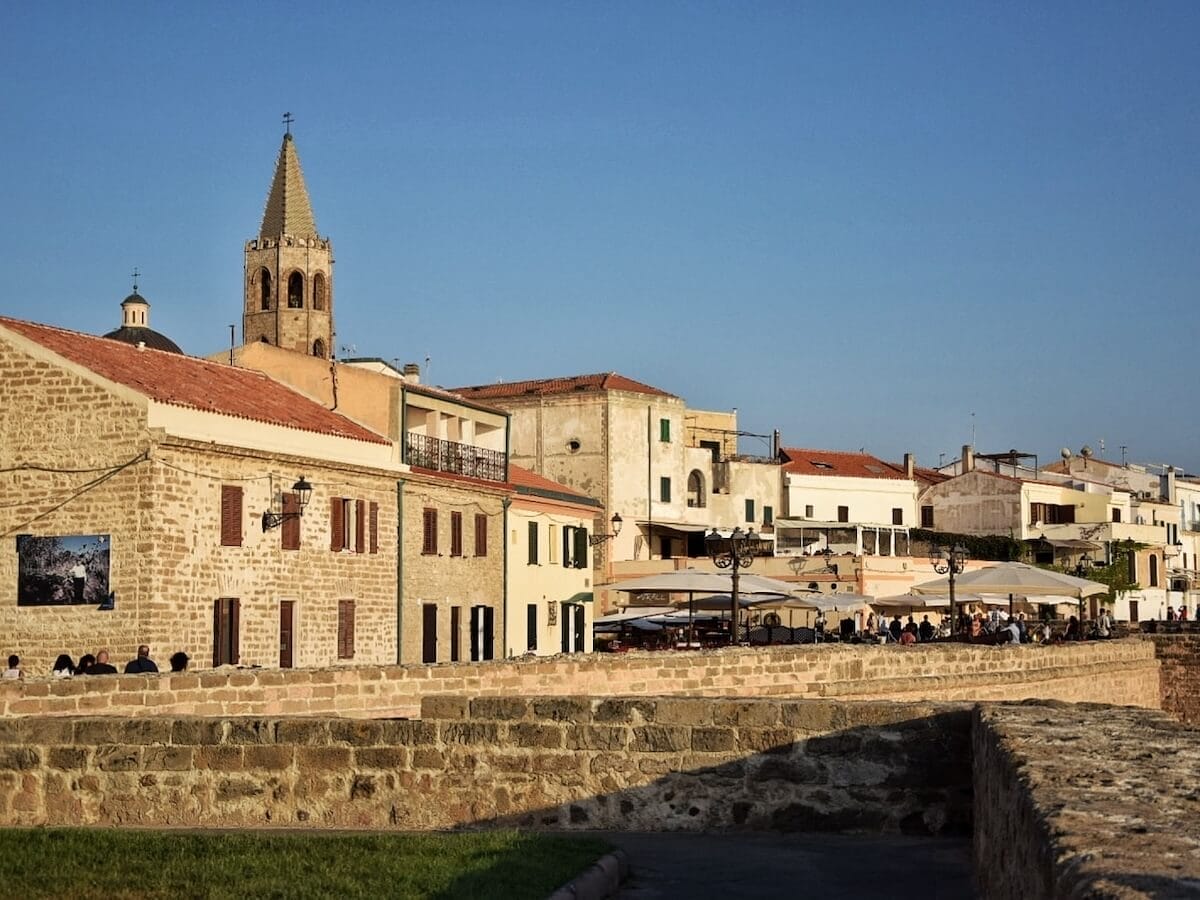
What I love about Alghero is that, although it attracts a multitude of tourists every year, it has retained its character and local vibe. I go there as often as I can – in fact, I have a weekend planned there at the end of this month – and I have explored it in depth.
There are many things to do in Alghero and its surroundings – from exploring the historical center, to visiting the nearby natural sites and beaches, to exploring other small towns in the area.
Since I visit Alghero all the time, I thought I’d share my expertise and tell you everything about the unmissable things to do in Alghero. I will also share some practical information to help you plan your visit.

Quick Alghero Overview
No time to read the entire post? Don’t worry, here’s a quick overview of Alghero:
- Where is Alghero? Alghero is a coastal city in north-west Sardinia with a Catalan-influenced old town, sandy beaches, and easy day trips.
- Is Alghero worth visiting? Yes. Alghero has a great mix of history, coastline, food, wine, and sunsets along the bastions.
- How long should you stay in Alghero? 2–3 days are enough to explore the city and the nearby beaches and natural sites (Porto Conte, Neptune’s Grotto). If you have 4–7 days you can take day trips to Bosa or La Pelosa.
- Do I need a car in Alghero? The old town and main beaches work without a car; a car helps if you want to visit Capo Caccia, go on hikes, visit wineries, and inland sites.
- Unmissable things to do in Alghero: A walk along the bastions at sunset, Neptune’s Grotto, Porto Conte Nature Park, Palmavera Nuraghe, Maria Pia Beach, Sella & Mosca wine estate.
- Best time to visit Alghero: Late May–June and September–October for warm water and lighter crowds.
Map of Places of Interest in Alghero
To get a better understanding of where the various attractions, places of interest, beaches, hotels, and restaurants in Alghero are located, I have created a map.
How to use this places of interest in Alghero map: This map points out the various places of interest in Alghero – attractions, beaches, hotels, and restaurants. To enlarge it, you can use your computer mouse on desktop or laptop. On a smartphone, just use your fingers. To save the map to your Google Maps account, you just need to click on the star next to the title. You can then view the saved map by clicking on “Your saved maps” in your Google Maps. For a larger version, click on “view larger map” in the top right corner of the screen.
Now, let’s discover the history of Alghero and the best things to do in Alghero.

Best Things To Do In Alghero Sardinia
Go for a walk along Alghero Bastions
Much like the rest of the island, Alghero Sardinia has a unique history. The best thing to do in Alghero to grasp its past is to start exploring the city from its historic center, a maze of narrow, cobbled alleys (make sure to wear comfortable shoes) with lots of lovely shops, cafés, gelaterie, and many nice restaurants.
The most impressive attraction in the historic center of Alghero are the city walls (known as bastioni) that were built in the 16th century and that run from Porta a Mare (one of Alghero’s gates) to Piazza Sulis, where you can spot Sulis Tower.

Along the Bastioni, you can observe the various watchtowers – Torre di San Giacomo, Torre della Polveriera, and Torre di Sant’Elmo.
Local Tip: I recommend going for a walk on the Bastioni in time for sunset to enjoy the views of Capo Caccia promontory in the distance; or for dinner. There are many restaurants in the stretch called Bastioni Marco Polo.
Good to know: Piazza Civica, next to Porta a Mare, is one of the nicest squares in Alghero and houses nice boutiques and cafés. The most famous one is Caffé Costantino, on the ground floor of Palazzo d’Abis.
Alghero is small and easy to explore, but you may want to consider joining this guided walking tour of Alghero to learn more about its uniqueness.

Visit Alghero’s churches
Located in the historic center you will also find the 16th century Catalan Gothic Santa Maria Cathedral, one of the prettiest (and largest) churches in Sardinia, which overlooks Piazza del Duomo: the interior is actually in late Renaissance and Baroque styles, and divided in three naves.
Annexed to the Cathedral, there’s a bell tower with a pyramidal spire beautifully decorated with colored majolica that recalls the Catalan style. You can access it through a Gothic doorway in Via Principe Umberto and from there you can get beautiful views of the city.
Next to the tower, the 14th century Porta a Terra is one of the two main gates of the city. It’s a 23 meters (75.4 feet) tall tower that is now home to a museum where you can learn a bit more about the history of the city. For great views of the city, walk up the terrace on the second floor.
Other churches you may want to check out are San Francesco, originally built in the 14th century in Catalan Gothic style and with a Renaissance-style facade that was added after the original one collapsed in 1593; St. Barbara Church, the oldest church in Alghero; and St. Michael Church, which has a beautiful dome.

Visit the Coral Museum
As Alghero is located in the Riviera del Corallo, coral is a big part of the local economy. The most interesting museum in the city (and one of the best museums in Sardinia) is the Museo del Corallo (Coral Museum of Alghero). Here, you can learn more about this traditional craft. The museum is located inside a beautiful Art Nouveau villa.
Alghero has been linked to coral fishing for centuries, and the museum explains how this precious material shaped the town’s economy, craftsmanship, and identity. The museum tells the story from both a scientific and cultural angle—how coral grows, where it’s found in the Mediterranean, and why the waters around Alghero became so important for its harvest.
The exhibit consists of examples of traditional Sardinian coral jewelry, tools used by divers, and historical documents that show how coral once traveled from Alghero to the major trading centers of Europe.
There’s also an emphasis on sustainability and the regulations now in place to protect coral reefs. It’s a compact museum divided into sections. Every object in the exhibit has its own explanatory panel, so you learn a lot from the visit, but you can also get a guide for a small fee once you arrive.
The Coral Museum of Alghero is in Via XX Settembre 8. Opening hours vary depending on the day and the season, so check out their website before heading there.

Visit Nuraghe Palmavera
There are several interesting archaeological sites near Alghero, Sardinia, including one of the best-preserved Nuraghe in Sardinia.
I recommend going to Nuraghe di Palmavera, a nuraghe village that dates back to 3500 years ago and where you will be able to see a main tower and a secondary one.
Nuraghe Palmavera, just a short drive from Alghero and easy to reach by bus fro the city center, is one of the most atmospheric Nuragic sites in northern Sardinia. Dating back to the Bronze Age, the complex includes a central tower, a later outer tower, courtyards, and the remains of a small village.
The site is fairly compact and easy to explore, and there are descriptive panels you can read to get a sense of what you are looking at.
Nuraghe Palmavera is open daily. There is a small admission fee, and you can also get a combined ticket for Nuraghe Palmavera and Anghelu Ruiu Necropoli. The site is best visited with a guide: you can join this guided tour that lasts one hour and explains its history and its relevance.
There’s also the option of this excellent Palmavera Nuraghe and Porto Conte Nature Park tour, which is perfect if you want to visit both places on the same day. It includes a transfer by minibus and the overall tour lasts 3 hours.
I have a Quick Guide To Nuraghe Palmavera, which you may want to read for more information.

And Anghelu Ruju Necropolis
About 10 km north of Alghero, on the way to Porto Torres and almost in front of Sella e Mosca Winery, you will find the Necropoli di Anghelu Ruiu (Anghelu Ruju Necropolis), one of Sardinia’s most famous Domus de Janas, and a UNESCO World Heritage site since 2025.
This is one of the island’s most important prehistoric sites and a fascinating window into life on the island long before the Nuragic era.
Anghelu Ruju was discovered by chance in 1903 by people working in the vineyard of Sella e Mosca. Here, archaeologists found 38 tombs carved in sandstone that date back to 3000 to 2700 BC (late Neolithic and Copper Age) —known as domus de janas, or “houses of the fairies.”
As you explore the site, you’ll notice carved doorways, symbolic motifs, and chambers arranged almost like small underground homes. Many of these decorations reflect early Mediterranean beliefs tied to the afterlife and fertility. The site feels peaceful and slightly otherworldly, with open fields surrounding the red sandstone cliffs.
To get a better understanding of Anghelu Ruju Necropolis, consider getting an audioguide.
Good to know: If you are unable to visit the archaeological sites, you could visit the Archaeology Museum of Alghero, located close to the cathedral. It has artifacts from sites such as Anghelu Ruju and Nuraghe Palmavera, with pottery, tools, jewelry, and everyday objects showing how people lived around Alghero thousands of years ago.

Enjoy Alghero’s beaches
One of the best things to do in Alghero in the summer is to go to the beach. It’s great that Alghero is home to many beautiful beaches, perfect for a summer day with the family. Most of them are easy to reach from the center of Alghero – they are either a walk away or a quick bus ride. For others, you will want to have a car.
Here are the beaches I recommend visiting:
Le Bombarde and Il Lazzaretto – North of Alghero on the way to Porto Conte, these small, fully equipped coves are located right next to each other and share the same parking lot. They have beautiful fine sand and are known in Sardinia for their cold sea temperature, as well as their crystal clear waters. Surrounding the beaches, there’s a thick forest of Mediterranean pines home to thousands of cicadas who’ll provide free live entertainment.
Mugoni – Part of Porto Conte Nature Reserve, this stretch of fine sand and clear waters has more of a local feel compared to Le Bombarde and Il Lazzaretto, and offers stunning views of Capo Caccia. There are kiosks and beach clubs along the beach.

Lido San Giovanni – This is Alghero’s main urban beach, easy to reach on foot from the center of Alghero. It’s perfect if you want a place that’s easy to reach and a fully equipped beach.
Maria Pia – This beautiful beach is located on the way to Fertilia (where Alghero’s Airport is located). It’s home to gorgeous sand dunes and is backed by a forest of Mediterranean pines.
Spiaggia di Porticciolo – Also known as Torre del Porticciolo, it’s a lovely small cove that has incredible views over the Porto Conte Natural Park and is surmounted by a 17th-century Aragonese watchtower.
Porto Ferro – North of Alghero, this is one of the most secluded beaches in Alghero, and it’s known locally for being one of the nudist beaches in the area. It’s surmounted by three Aragonese towers.
You can explore several beaches in Alghero on this nice bike tour. The tour lasts for hours and visits the beaches of Punta Giglio. There’s also this great Alghero beaches tour that includes snorkeling.
I have a Guide To The Best Beaches In Alghero for more beaches to visit during your Alghero trip.

Go on a boat tour along the coast
If you are visiting Alghero in the summer months, there’s no better way to appreciate the beauty of the landscape and the coast of Alghero than on a boat tour. There are many available options, so whatever your taste and budget, you are bound to find something perfect for you.
For example, you could consider a full-day sailboat or catamaran tour, or a sunset tour with drinks, and if you are keen to admire marine life, there are plenty of snorkeling tours too.
Below are my top recommendations:
Andrea Jensen sailing day trip – This is by far the most popular boat tour in Alghero, and makes several stops, including in Porto Conte and Capo Caccia. The tour includes lunch and the use of snorkeling equipment.
Full-day catamaran tour – This tour makes several stops, including to Cala Inferno, the Isola Foradada, Capo Caccia and the Bay of Porto Conte, Capo Galera, Torre del Lazzaretto, and the famous Bombarde Beach. Lunch is included.
Dolphin watching tour – Perfect if you are visiting Alghero with your family. You will have a marine biologist on board and can rest assured the tour is run in a responsible way.
My post, The Best Alghero Boat Trips, shares even more options to consider.

Take a (sunset) walk in Capo Caccia
Capo Caccia is one of the most dramatic natural landmarks near Alghero, a limestone promontory that rises above the sea. The cliffs drop steeply into deep blue water, creating one of Sardinia’s most striking coastal panoramas.
The drive from Alghero to Capo Caccia is already scenic (in fact, one of the most scenic drives in Sardinia), but the views from the top are something else. The area is popular for hiking, photography, and sunset watching.
Indeed, Alghero faces west, which means it’s one of the best sunset spots in Sardinia – but the sunset from Capo Caccia is unmissable.
There is a trail from where you can get stunning coastal views, and the sunset over Foradada Island is out of this world. On clear days, you can see all the way to Stintino.
To make the most of Capo Caccia, consider joining this e-bike tour. It lasts 4 hours, and goes to Punta Giglio and Mugoni Beach.

Visit Grotta di Nettuno
Capo Caccia is also home to the famous Grotta di Nettuno (Neptune’s Grotto), one of the most famous caves in Sardinia. The cave was formed millions of years ago and is filled with incredible stalactites and stalagmites. My favorite spot inside the cave is a still, mirror-like saltwater lake that gives it an almost otherworldly feel. The light here creates a stunning show.
Good to know: There are two ways of getting to the cave: by boat from Alghero’s harbor (as long as the sea conditions are good) or via the Escala del Cabirol, a 654 staircase that offers breathtaking views (and lots of exercise opportunities). Tickets include a guided visit and must be booked in advance on the Alghero Experience Website.
My post, A Short Guide To The Grotta Di Nettuno, shares more tips to visit this unique cave.

Explore Porto Conte
Visiting Porto Conte is what to do in Alghero if you want to appreciate the unique natural environment of the area. It’s located northwest of Alghero, where Mugoni beach is located.
Porto Conte is a protected bay and nature reserve known for its calm waters, forested hills, and long stretches of quiet coastline. It’s a fantastic place to go hiking and biking, as well as snorkeling in the most sheltered coves, and the coastal views from there are breathtaking.
Much of Porto Conte’s charm lies within the Le Prigionette Nature Reserve, a vast protected area crossed by hiking and cycling trails. Here, you can spot wild donkeys, deer, and a surprising variety of birdlife while exploring viewpoints that look out toward Capo Caccia.
The landscape shifts from pine forest to open scrubland, with beautiful sea views appearing along the paths.
You can reach Porto Conte by car from Alghero. There is a small admission fee. There are also some excellent guided tours you could consider:
This guided hike in Porto Conte comes highly recommended. It’s a full-day tour that lasts 6 hours and also goes to the beautiful Oasi Naturale Le Prigionette.
Otherwise, consider this highly-rated sailboat excursion to Porto Conte that lasts all day and also includes lunch and several stops for swimming.
This bike tour of the beaches of Punta Giglio is a fantastic way of exploring the Porto Conte Nature Reserve. Alternatively, there’s this e-bike tour of Le Prigionette Oasis that lasts 4 hours.
Make sure to read my post, The Best Hikes In Sardinia, for more hiking opportunities on the island.

Diving in Nereo Cave and the Via Ferrata del Cabirol
If you are into adventure sports, Alghero will prove to be an excellent destination for you.
For rock climbing, the Via Ferrata del Cabirol is a great medium-difficulty ferrata with stunning views of the coast. It is set along the cliffs of Capo Caccia, near Alghero, and it is one of Sardinia’s most scenic via ferrata routes.
It follows a narrow ledge high above the sea, offering dramatic views of the coastline and deep blue water below. The route isn’t technically difficult but does require a good head for heights, as some sections are quite exposed. Unless you are an expert and have the right gear, you are better off going with a guide.
Local Tip: As the Via Ferrata del Cabirol is right in the sun, only opt to do it in the spring or fall months. It’s simply too hot otherwise.
Alghero is also one of the best diving destinations in Sardinia. The best experience is a dive in Nereo Cave (only for experienced divers), near Capo Caccia: it’s the biggest underwater cave in the Mediterranean; a cave system that features arches, tunnels, air pockets, and chambers lit by incredible blue light.

Try local food
Sardinian food is delicious, and changes a lot from place to place. Of course, Alghero has its own specialties. The city is famous for its seafood restaurants.
The most popular (and also expensive) dish to try there is lobster “alla catalana” – Catalan-style lobster, which is boiled and then served with thin slices of tomatoes and onions. There are many places that serve it in the historic center and in the restaurants near the harbor, but make sure to book in advance.
Other local specialties include octopus agliata – octopus served with a sauce made with tomatoes, sundried tomatoes, and garlic.
You will also find Sardinian classics like malloreddus or spaghetti con le vongole.
If you don’t like fish, there are plenty of alternatives – one of the last times I visited, I was with a friend who doesn’t eat fish or seafood, and she did not have any issues finding a good dish on the menu.

The following are my favorite restaurants in Alghero:
Al Vecchio Mulino – The best pizzeria in the historic center of town.
Focacceria Milese – Budget-friendly place for a quick lunch. Very informal, and totally yummy.
Gioia Mi – A perfect spot for a quick lunch. The crostoni are freshly prepared with high-quality ingredients.
Roberto Murgia Dolci in Corso – The best place to try local sweets, including Alghero’s famous “menjar blanc” or Sardinian pardulas.
Quintilio – A bit outside of the city in a fantastic location overlooking the sea, it only serves grilled fish and seafood. Pricey but perfect for a romantic night out.

The Kings – A great restaurant on the Bastioni whose main specialty is raw seafood; it is quite pricey.
Nautilus – In a great location overlooking the harbor, you will find great quality seafood and professional yet friendly service. It is not cheap, but worth it.
Trattoria al Refettorio – In a lovely spot in the heart of historic Alghero, this restaurant serves delicious dishes and even better desserts. Try the octopus and the crema catalana cake. There is a long wine list to pick from.
Trattoria Lo Romani – Nice restaurant that serves comforting dishes with a wide choice of seafood and meat. You will find good, easygoing service and a cozy atmosphere.
If you wish to learn how to make some local specialties, you could consider this cooking class in Alghero. It’s suitable for vegetarians.
I also have a post on Cooking Classes In Sardinia that you could read for more options.

Wine tasting at Sella e Mosca
Alghero is home to some of the best vineyards in Sardinia, producing some of the best Sardinian wines.
The most famous one is Tenute Sella e Mosca, founded in 1899. The winery, just a short drive from Alghero (it’s on the other side of Anghelu Ruju Necropolis), is one of Sardinia’s most historic and impressive wineries.
The estate covers hundreds of hectares, with vineyards stretching toward Monte Doglia and a peaceful countryside setting that feels a world away from town.
You can tour the historic cellars, learn how the winery shaped Sardinia’s modern wine industry, and taste local varieties such as Cannonau, Vermentino, and the rare Torbato, which Sella & Mosca helped preserve.
Sella e Mosca offers a wide range of wine-tasting experiences. They can last up to three hours, and the price varies depending on how many tastings you opt for.
Make sure to read my post A Guide To Visiting Sella E Mosca Winery to discover the best winery in the region.
I also recommend this wine and olive tasting experience: it’s a well-rated tour that goes to an olive mill and winery not far from Alghero.

Shop till you drop
Alghero is one of the best shopping hubs in Sardinia. It is the capital of Riviera del Corallo (Coral Riviera), so you will find many jewelry stores that sell jewels made in this beautiful, bright red or pink material, but you have to watch out for what you buy, and make sure the coral is harvested in a responsible way.
There are many small studios in the historic center where you can find some coral jewels. Prices vary depending on the coral’s quality and the craftsmanship, and styles range from traditional Sardinian designs to more contemporary or globally inspired pieces.
Local Tip: The letter “A” displayed in the shop and styled to resemble a coral indicates that the coral sold there is authentic and certified as Mediterranean coral.
A better – more sustainable – alternative is to buy Sardinian filigree jewelry, which is also typical of Sardinia. You can find anything from pendants to buttons or earrings.
Other than coral and filigree, there are many other shops. Alghero is the birthplace of Antonio Marras, a well-known Italian designer, and he obviously has his atelier in the city, right by the Porta a Mare.

Visit the nearby Bosa
You can go on many day trips from Alghero, and Bosa is certainly a popular one. I find this to be the prettiest small town in Sardinia, and one of the most charming in Italy.
Bosa is set along the Temo River on Sardinia’s west coast. You will love the pastel houses that climb on the hillside below Castello Malaspina (also known as Castello Serravalle), a medieval fortress that offers sweeping views over the town and the surrounding countryside.
The old center of Bosa is a maze of narrow lanes, stone staircases, and small squares where everyday life unfolds at an easy pace.
The riverfront is a charming spot perfect for a walk. It’s lined with palm trees, and there are cafés and views of the old tanneries—reminders of Bosa’s long craft tradition. You can visit the castle and even take a cruise along the Temo River, which crosses the village, for stunning views.
A short drive away, Bosa Marina is a nice sandy beach – though I much prefer Cumpultittu, a small rocky cove, or Cani Malu, a fantastic swimming spot (both of them require a bit of a hike to reach).
Before heading back to Alghero, make sure to try the Malvasia di Bosa wine. It’s a famous sweet wine much beloved by locals.
Bosa is a 45-minute drive from Alghero, along a very scenic road. If you don’t have a car, you may want to consider this guided day trip to Bosa from Alghero that includes a live tour guide and a tasting of local Malvasia wine.
My post, A Useful Guide To Bosa, will help you decide which of the many attractions in Bosa you should visit.

Spend a day at La Pelosa Beach in Stintino
One hour drive north of Alghero, in Stintino, La Pelosa is one of the most famous beaches in northern Sardinia.
Its water is an almost unreal shade of turquoise, and it is incredibly shallow and clear – perfect if you are visiting with children, as it’s safe for them. Powder-fine white sand stretches along the shore, backed by views of the Torre della Pelosa, a 16th-century Aragonese watchtower standing on a small islet just offshore.
This is a protected beach, and access is limited to no more than 1500 daily visitors between 15 May and 15 October. This means you will have to book your visit via a local app. You also need to use a straw mat under your towel to prevent sand loss.
I have a full Guide To Visiting La Pelosa that you should read before going to familiarize yourself with the booking system and the local regulations.

Go on a day trip to Asinara Island
Asinara Island is one of Sardinia’s islands, located just off the northwest coast. It is one of the most untouched and fascinating places you can visit on a day trip from Alghero.
Once a quarantine station, then a high-security prison, it’s now one of Sardinia’s two national parks, where wild landscapes, quiet coves with incredibly clear waters, and the island’s famous albino donkeys create an atmosphere that feels far removed from the mainland.
Nobody lives in Asinara Island other than the park rangers and the people working in the hostel and the guest house located in Cala d’Oliva (the only small village on the island where once the local community lived). In addition to this, only service cars can circulate on the island.
For these reasons, Asinara has become a sanctuary for wildlife and a haven for travelers looking for something a bit different from the usual beach day.
To get to Asinara from Alghero, you can drive to Stintino and then hop on a fast ferry to Fornelli. From there, you can explore the island in several ways: guided 4×4 tours, e-bikes, small tourist trains, or even on foot if you’re up for long, scenic walks.
The guided options are ideal for a day trip because they cover more ground and explain the island’s layered history—from its days as a prison colony to its current role as a protected reserve.
I recommend this guided electric minivan tour of Asinara Island, which stops at plenty of beaches (including Cala Sabina) and also visits the local turtle rehabilitation center.
You could also consider this sailboat tour to Asinara that departs from Stintino and includes lunch. It makes stops in the most beautiful coves and includes lunch. Make sure to read my post, A Detailed Guide on Asinara Island, to learn more about the island’s history and geography.

Go to Sassari for a day
If you are looking for more day trips from Alghero, consider going to Sassari. You can get there easily by car from Alghero (a 40-minute drive) or even by public bus or train.
The second largest city in Sardinia is not the most popular place to visit, which means that, should you decide to go, you will really be off the tourist path and be able to experience a much more local vibe.
The main sights are all in the historical center. You will want to pop into Piazza Italia – one of the largest and prettiest squares in Sardinia. Not far from it, the Museo Sanna is a great archeology museum, the personal collection of Giovanni Antonio Sanna, a prominent Sardinian politician and entrepreneur.
Other great sights in Sassari are St. Nicholas Cathedral and its bell tower, St. Anthony Abbot Church, and the Civic Theater.
If you happen to visit Sardinia in May, consider going to Sassari for the Cavalcata Sarda, one of Sardinia’s most acclaimed festivals. It’s a parade of traditional Sardinian costumes from a selection of small towns and villages on the island that goes through the streets of the historic center, and a great occasion to learn more about Sardinian culture.
Check out my post, A Short Guide To Sassari, for more ideas on things to do in this lesser-known Sardinian city.

How Long To Stay In Alghero
I often get the question of how long to stay in Sardinia, or how long to spend in a specific destination in Sardinia. Two or three days are enough to explore Alghero, the nearby beaches, and other attractions such as Porto Conte Nature Reserve or the Neptune’s Cave.
However, there are so many things to do in Alghero that you can keep yourself busy for a week or more. For example, if you have a week, you can add a day trip to Bosa, to nearby archaeological sites, and even visit La Pelosa Beach in Stintino.
Here’s a quick overview of what to do in Alghero, depending on how long you are staying.
| Trip length | Suggested plan |
|---|---|
| 1 day | Old town + bastions + Lido San Giovanni Beach or Neptune’s Grotto |
| 2–3 days | Old town, beaches, Porto Conte Nature Reserve, Neptune’s Grotto, wine tasting. |
| 4–7 days | Add a day trip to Bosa, nearby archeological sites, a day trip to Sassari, La Pelosa Beach in Stintino. |

Do You Need A Car In Alghero?
The city of Alghero is so small that you don’t need a car to move around if you just wish to stay in town. It’s easy to reach Alghero beaches on foot (Lido San Giovanni and Maria Pia are close to the center) and by bus or bike (Le Bombarde, Lazzaretto, and Mugoni are all connected to the town center by bus).
The same bus connects the center of Alghero to Nuraghe Palmavera.
Likewise, you don’t need a car if you want to go on a boat trip, as these depart from the tourist harbor, which is close to the center of Alghero.
However, I recommend renting a car if you want to explore further – it’s the best way of getting around Sardinia. For example, a car allows you to more easily reach Porto Conte Nature Park, where you can enjoy many hiking trails, or Capo Caccia, from where you can walk down the Escala del Cabirol to Neptune’s Grotto.
It’s also best to have a car if you want to go to Bosa or Sassari for a day, if you want to go wine tasting at Sella e Mosca winery, and visit the nearby Anghelu Ruju Necropolis or if you want to go to La Pelosa Beach in Stintino.
I recommend renting a car directly at Alghero Airport for ease. I recommend using Discover Cars to compare the prices of car rentals in Alghero. This is my favorite comparison site, and I have used it widely in many places in the world.
Responsible Tourism Tip: The last time I visited Alghero I noticed people riding horse-drawn carriages. Please, do not ride them – those horses must be stressed to ride among cars and noise. As an alternative, and especially if you have children, opt for the train on wheels.
Good to know: Alghero is easy to reach by plane from Italy and Europe via regular and budget flights. Once you land, there are buses connecting the airport to the city, but you can also book a private transfer on Welcome Pickups – it’s a reliable company that I have used widely in many places in the world.
For more information on how to get to Alghero, check out my post How To Get To Alghero From The Airport. I also have a guide on How To Get From Cagliari To Alghero and How To Get From Olbia To Alghero.

Where To Stay In Alghero
You won’t have a hard time finding a good place to stay in Alghero, no matter your budget and taste. I have selected a few good places to stay for you – some are in the city center, others closer to the beach or immersed in the countryside:
- Casa Villamarina – Gorgeous boutique hotel on the grounds of Sella e Mosca winery, perfect if you want to stay somewhere very peaceful.
- Musica Guest House – A 15-minute walk from the center of Alghero, it has comfortable rooms, a scrumptious breakfast, and the host is a real star.
- Aigua – Nice guest house in the historic center of Alghero. Rooms have a small kitchen, and breakfast is included in the price.
- Hotel Sa Cheya Relais and Spa – One of the best hotels in the area, it’s a quick drive from Alghero. It features spacious rooms and a gorgeous pool.
- B&B La Bouganville – Great bed and breakfast near one of the best beaches in the area.
My posts, The Best Hotels In Alghero and The Best Airbnbs In Alghero, share more options for places to stay in town.

Guided Tours of Alghero
Alghero is easy to explore independently, but a guided tour will give you a proper introduction to the city. While the city is small, it has a unique history, and it would be a pity not to get to know it.
These are my recommendations for guided tours in Alghero:
This guided walking tour of Alghero will help you learn more about its interesting history and culture. It only lasts 1.5 hours, so it’s easy to fit into a busy schedule.
This fantastic bike tour visits Alghero and the Coral Riviera and is a fun experience for the whole family.

FAQs on Visiting Alghero Sardinia
In Italy, Alghero is famous for being a Catalan town. It’s also famous for the coral that’s sourced locally (the area is indeed known as Riviera del Corallo, or Coral Riviera in English). Local artisans create beautiful jewels with coral and gold. Make sure to visit the Coral Museum of Alghero to learn more about this unique art.
Alghero is definitely worth visiting. It’s one of the prettiest cities in Sardinia, with a Catalan-influenced old town, beaches, caves, excellent restaurants, and easy day trips. It’s a nice place to base yourself for a few days.
Alghero is known locally as the Sardinian Barceloneta, a nickname that refers to the Catalan heritage that dates from the 14th century.
The original name of Alghero is L’Alguerium (or L’Alguer in Catalan). The name refers to an algae that was found on the coast. The city was actually founded in the 11th century by the Doria, a Genoese family. Back then, it was nothing more than a fishing village, though it had a strategic position.
The Pisans ruled over Alghero for a short period of time.
The Catalans arrived in 1353 and forced the locals to move to the nearby Villanova Monteleone.
In 1720, the city fell to the Savoy.
Yet, the Catalans left the strongest mark on the city.
2–3 days is enough to explore the old town, the bastions, the nearby beaches, and sites such as Neptune’s Grotto or Nuraghe Palmavera.
4–7 days is optimal if you want to add Anghelu Ruju Necropolis, Porto Conte Nature Reserve, a day trip to Bosa and Sassari, vineyards, or La Pelosa Beach.
Not for the old town and the main beaches (they are easy to reach by bus or even by bike), but a car definitely helps if you want to visit Porto Conte, Neptune’s Grotto, La Pelosa Beach in Stintino, or if you want to take day trips to Bosa or Sassari.
Yes. Alghero Old Town is walkable, and buses reach the main beaches and even archaeological sites such as Nuraghe Palmavera. For more remote spots, having a car just makes life easier.
Alghero – much like the rest of Sardinia – is a great place to visit throughout the year. If you intend to enjoy the beaches, you are better off traveling in the summer months between June and September.
October is another great month to explore Alghero.
You may want to avoid visiting in August as that’s when it gets most crowded. It’s also not a good time to visit Sardinia if you are on a budget.
Yes. There are some lovely beaches in Alghero. Maria Pia, Lido San Giovanni, Le Bombarde, Lazzaretto, and Mugoni are close and easy to reach, even by public transport. There are some lovely coves in the bay of Porto Conte.
Absolutely! Alghero is where to stay in Sardinia if you wish to explore the northwest of the island. You can land in Alghero Fertilia, one of the three airports in Sardinia. From Alghero, you can easily go on day trips to Porto Conte, Capo Caccia, La Pelosa Beach in Stintino, Bosa, archeological sites, and vineyards.

Final Considerations
Alghero is one of the nicest places to visit in Sardinia, and if you have the chance, you should not miss it during your trip to Sardinia. Not only is this historic Catalan town a destination in its own right, but it’s also a great base to explore northwestern Sardinia.
While Alghero is certainly a fantastic summer holiday destination, it is a perfect place to visit year-round. Go there in June or in October, for a chance to enjoy a day at the beach and to admire a magnificent sunset over Capo Caccia promontory.
Spend a long weekend in Alghero to take in everything the city has to offer, or stay longer to explore at a more relaxed pace.
Either way, I am sure you will love Alghero.
Recommended Readings


Further Readings
Make sure to read my other posts:
Pin It For Later!



Hello Frederic,
there isn’t a schedule I am afraid. I checked online as well, but found nothing. I think it may be more convenient to book a guided tour from Stintino, like this one https://www.getyourguide.com/stintino-l2962/from-stintino-asinara-minivan-tour-t664636/?partner_id=1LKJLHM&utm_medium=online_publisher&cmp=alghero_comment&mkt_cmp=true
Hi Claudia.
Congratulations for your website. Full of informations
After south korea last year, i’ll go to Sardinia in june
I don’t manage to get ferry schedules to Asinara from Stintino.
Can you help me ?
After Alghero, Bosa, isola di san pietro, isola di Sant’Antiocco, Cagliari, Baunei, Dorgali, cala gonone, Maddalena
I contact a dive centre in Maddalena
Thanks for advance
Hello Steven – unless it has changed recently, there is a parking lot in Capo Caccia which is also basically where you walk around. But it’s often packed at sunset, especially in the peak season. I don’t know any specific restaurant in Capo Caccia, but you can read my post https://strictlysardinia.com/best-alghero-restaurants/ for options in Alghero.
Hi Claudia!
My questions are slowly winding down and thank you from the bottom of my heart for being such a wealth of information and such a kind person! You’re just delightful!
I am enchanted with Capo Caccia and have been looking up parking in the area and have read some wildly different information. While some say you can only park along the perimeter road and quite challenging, others speak of a “car park” at the top of the cliff. Can you tell me if I should park or, another poster suggested taking a bus!!
Additionally, for another evening, is there a restaurant with a dynamite sunset view you can recommend?
Thank you again!
Your fan,
Steven
Check out my post “The Best Restaurants in Alghero”
Where to get national food in Alghero or around?
I have a post on the best restaurants in Alghero. Make sure to read that 🙂
Hello Claudia! we are coming to Alghero on the 22 of September. I read about Sardinian national foods: piglet or lamb cooked on a fire. Where we can get such dishes in Alghero or around?
Thank you
Make sure to rent a car! And check out my other posts about Alghero – I have TONS!
Looking forward to visiting Alghero in October. We are seniors and long walks not an option. Hope to find out about tours etc .
I am so glad you are finding it useful!
I ended up traveling to Alghero with a Sicilian friend and we had an amazing time, but nonetheless I highly appreciated reading your articles before the trip – such excellent content!
I am glad you find it useful!!
Amazing guides! There is so much useful information, very concise and to the point!
thank you very much